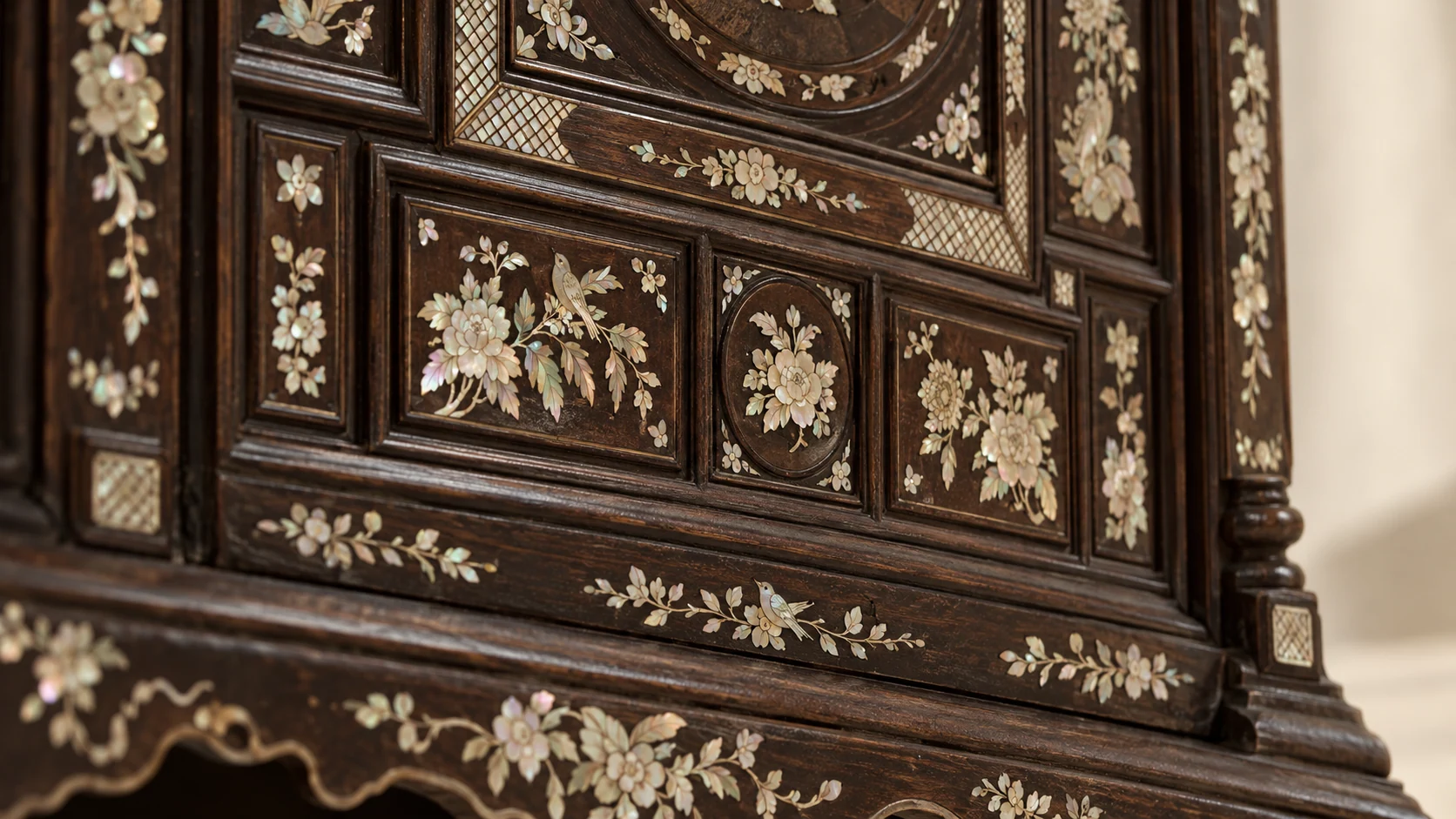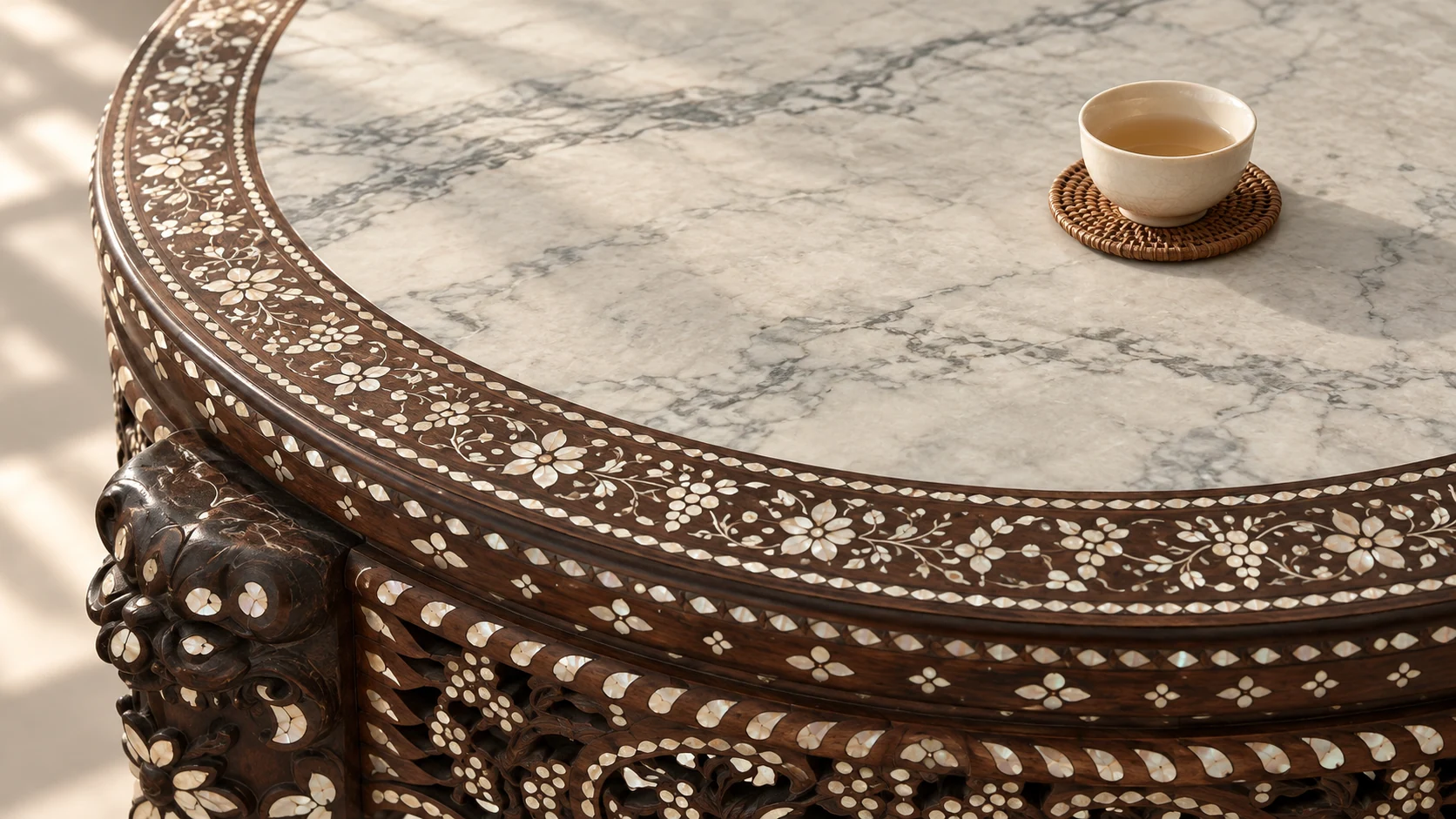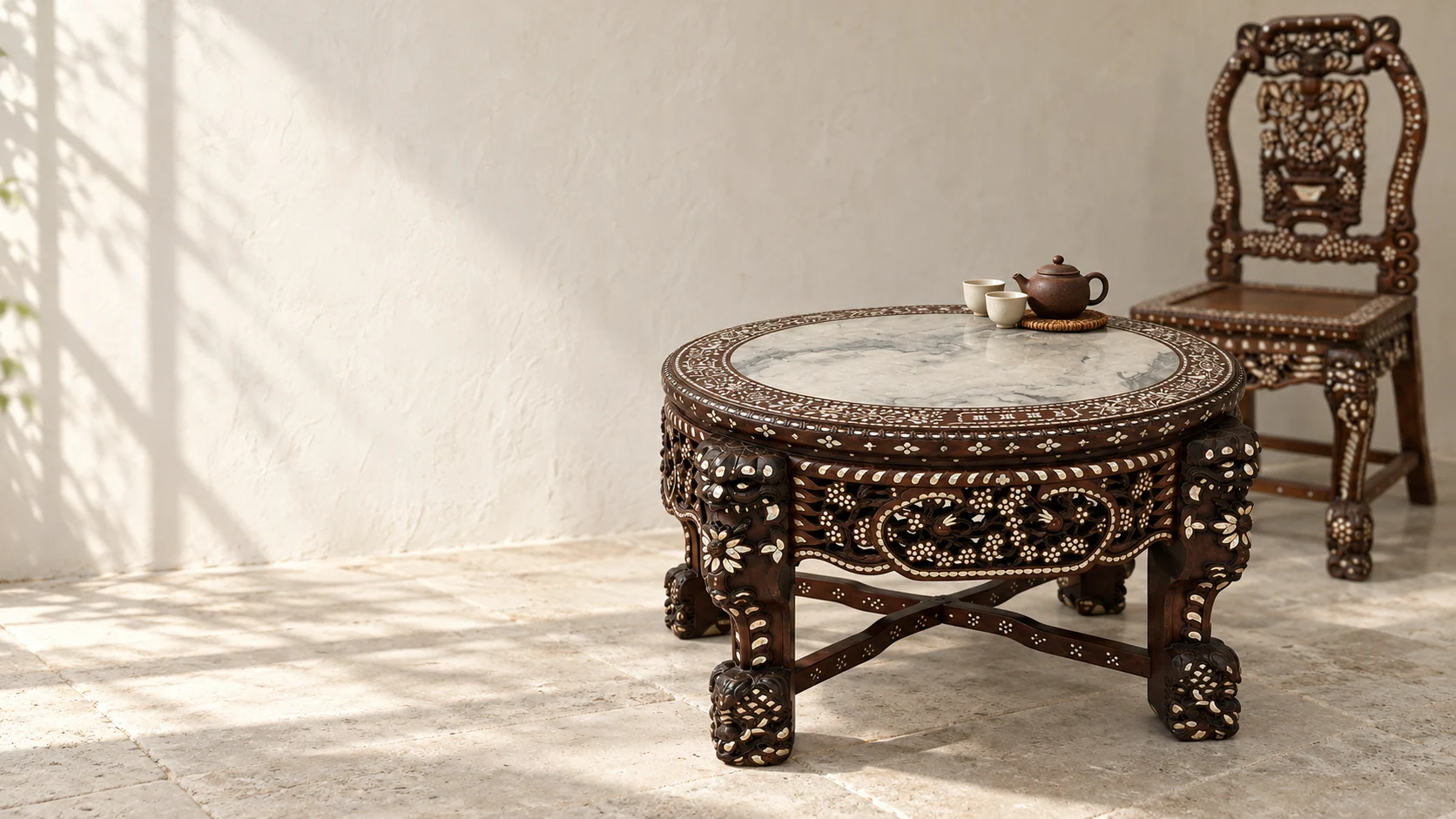
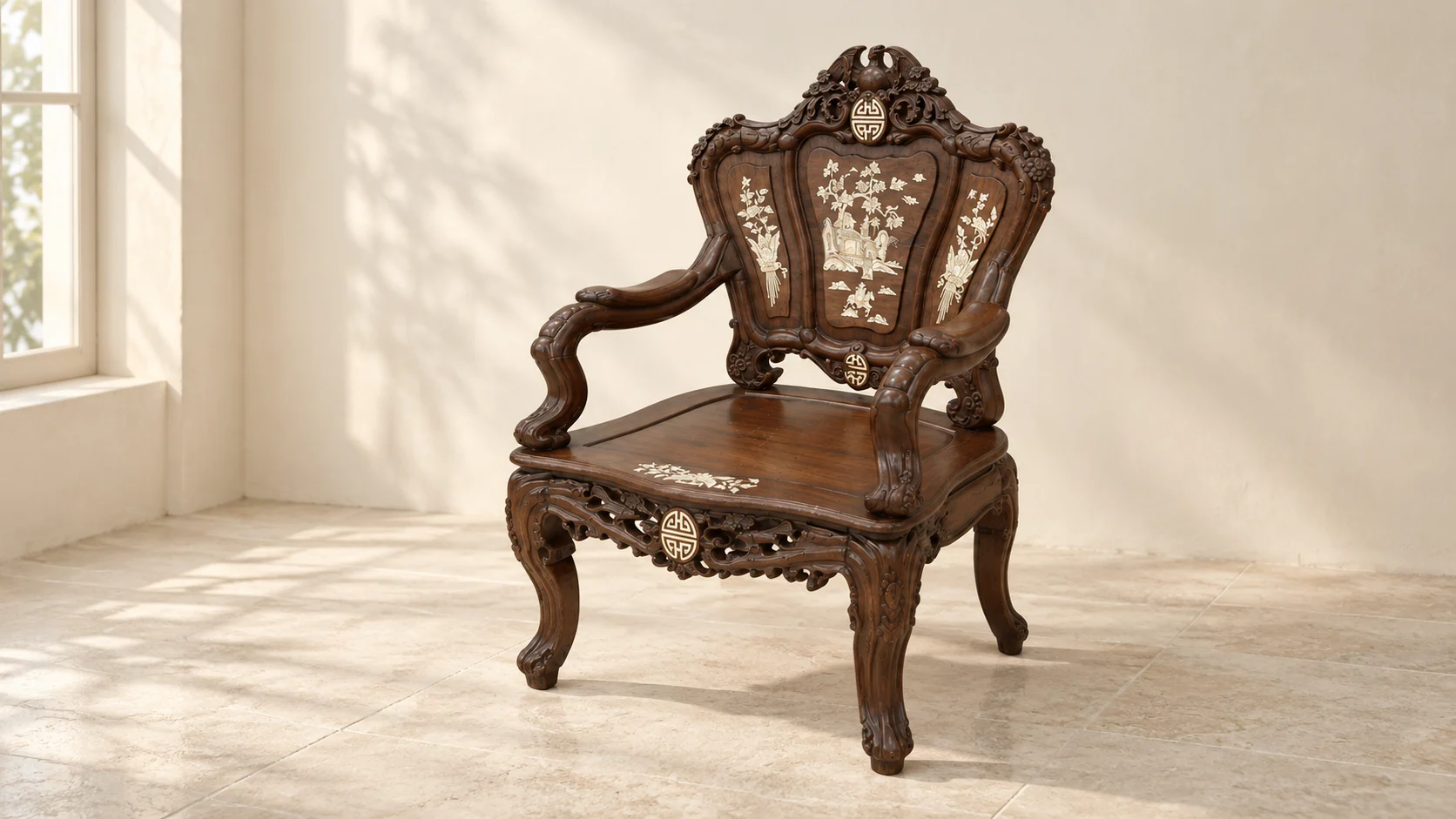
“Louis-style” is the everyday name for carved chairs with curved legs and a shaped back in the European manner. Next to Vietnamese stone-topped tables and wooden stools, their curves soften a room without looking out of place.
Spotting the Louis shape
The legs swell out at the top and draw in at the ankle, ending in a small scroll. The back rises in several arches, often with a carved cluster of flowers or a bird at the crest, and the arms curl over at the ends. Many have a European outline but a panel of inlaid scenery or a longevity character (Thọ) in the middle of the back, which makes them feel familiar.
Same wood, different lines
Louis-style chairs sit most easily with Vietnamese pieces when both share a dark wood tone. The shapes, though, should differ: a curvy chair beside a straight-lined cabinet, shelf or square stool looks more balanced than a corner made only of curves. To try it, start with a pair of Louis armchairs on either side of a round stone-topped table, and add the matching settee once you like the result.
Not one style for the whole room
A full Louis set of settee and armchairs already brings a lot of carving. A whole room of it feels heavy, so keep everything else simple: plain walls, natural linen curtains, a pale rug. One Vietnamese piece a few steps away, an inlaid cabinet or a wooden stool, gives the eye somewhere to rest.
Sit in it, and look at the back
Sit for a few minutes to find out whether the seat height and the angle of the back suit the people in your home. The back of a carved chair is often plain or lightly carved, so if it will stand in the middle of a room, look at it from behind too. Curved legs splay out further than straight ones, so leave a little extra room along the path.
— Kho Đồ Cổ