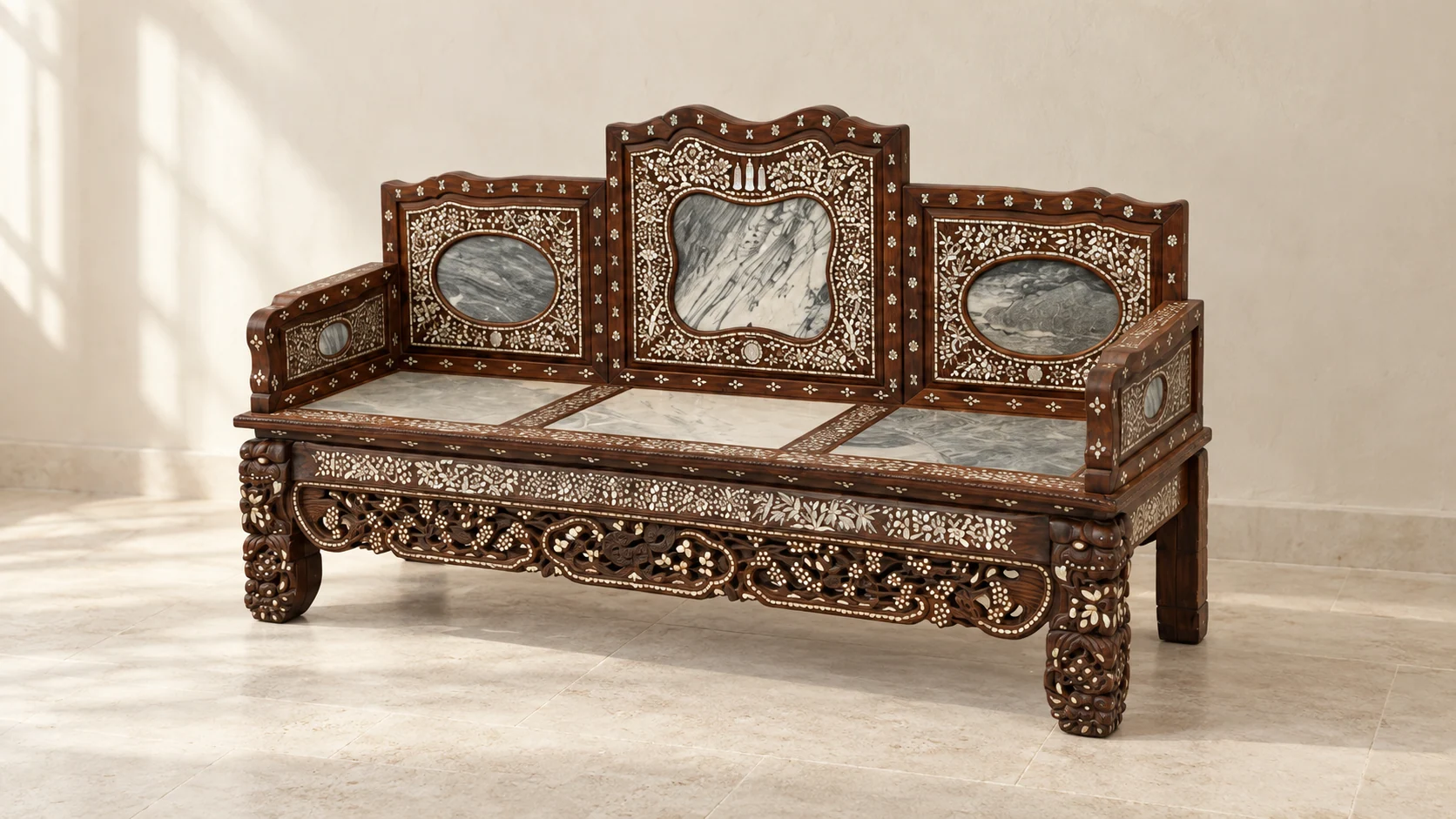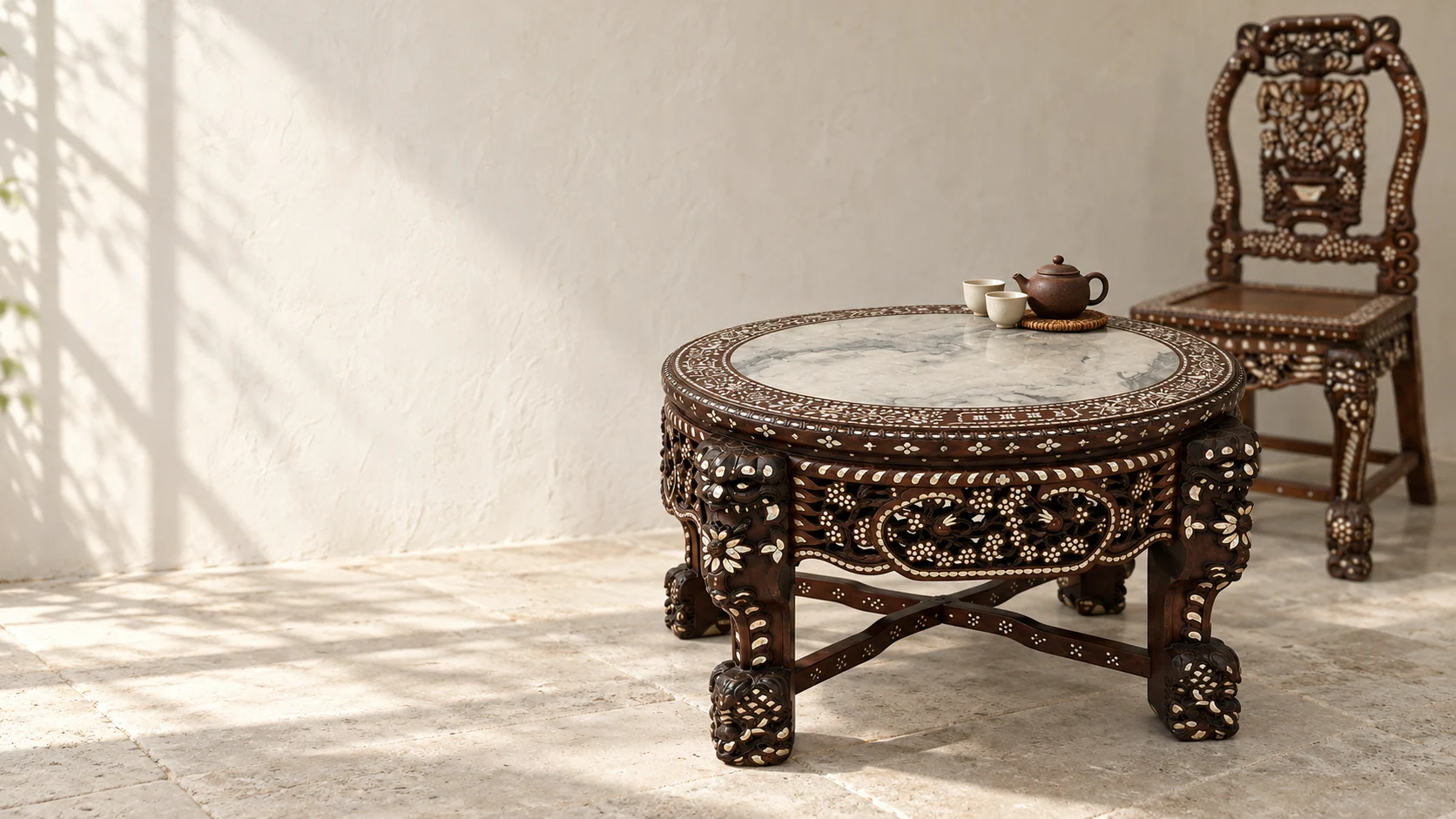
On carved furniture, veined stone is often set into round and square tables, and sometimes into the backs of armchairs and settees. The dark wooden frame holds the pale stone, and the piece looks cool and solid at the same time.
Why a stone top
Stone is hard, takes heat better than a wooden top and always feels cool to the touch, which is welcome on hot days. The flat, pale slab also gives the eye a rest among all the dense carving around it.
Reading the veins
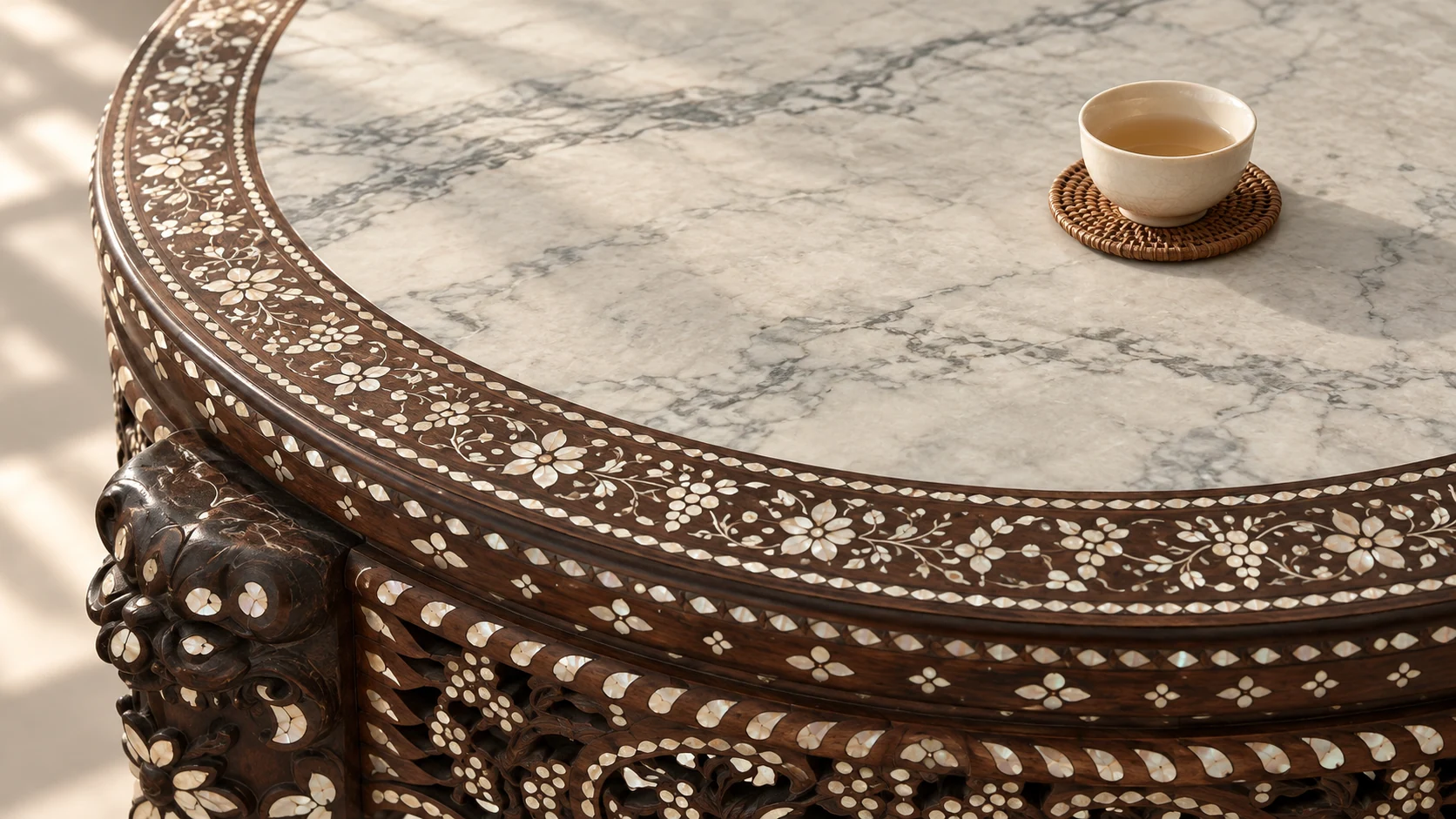
No two slabs are alike. Grey-white stone often has dark veins drifting across it like clouds or distant hills; brown stone is mottled and warmer. Step back a few paces and some tops look like a small ink painting set in a wooden frame. When choosing a stone table, look at the stone first, and only once you like the veining move on to the carving.
A teapot on the stone
A hot teapot won’t leave a white ring on stone the way it can on polished wood. What to watch is liquid: tea or coffee left standing can soak in and stain, especially on pale stone. The unglazed bottoms of clay teapots and cups are rough, and sliding them back and forth will scratch the surface over time. A tray or a few coasters takes care of both.
Cleaning the stone
For everyday cleaning, a soft cloth wrung out well is enough, followed by a dry one. Avoid vinegar, lemon and harsh cleaners: many veined stones go dull where acid touches them, leaving marks that won’t wipe off. Brush dust out of the gap between the stone and the frame with a soft brush.
— Kho Đồ Cổ