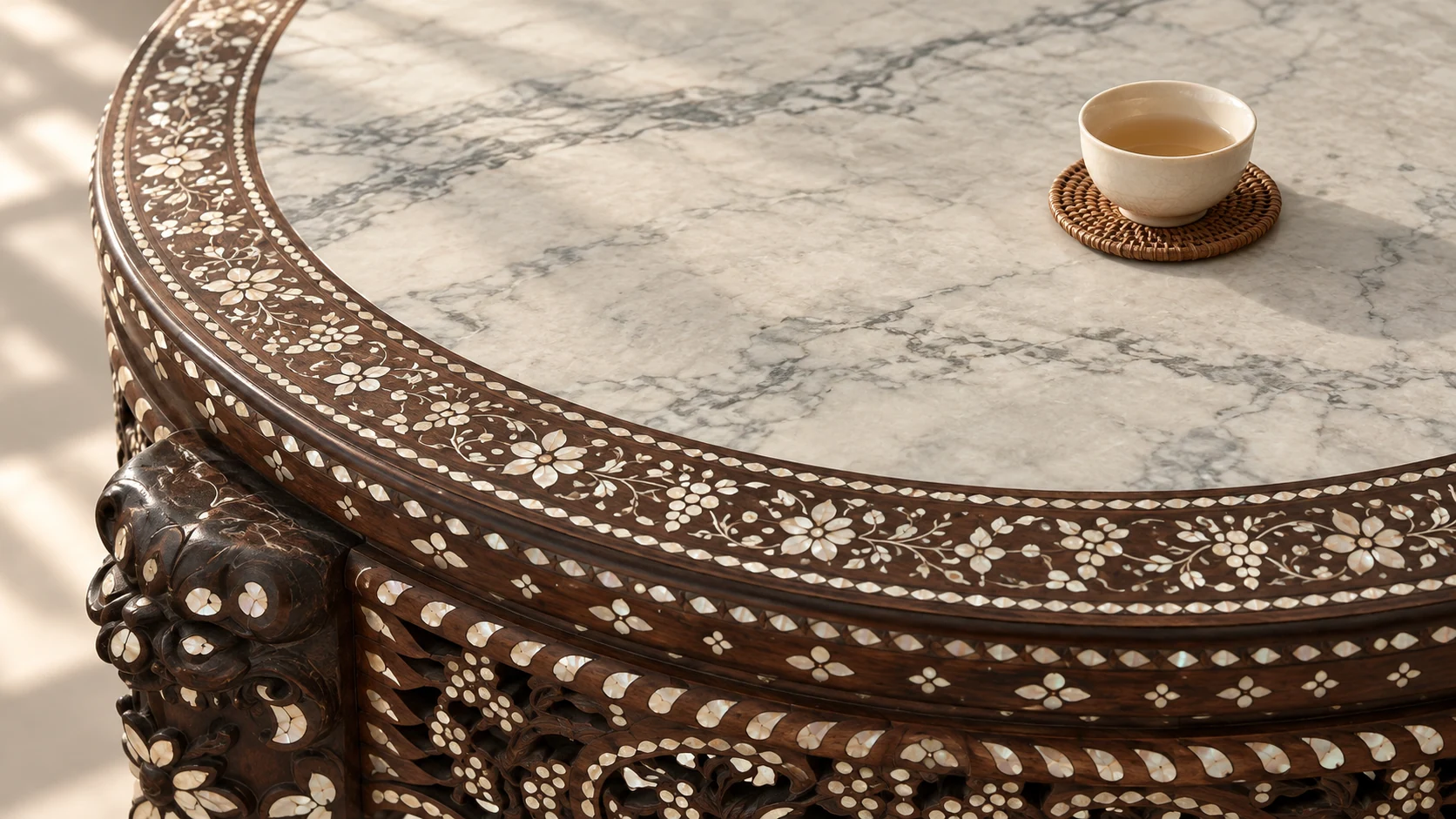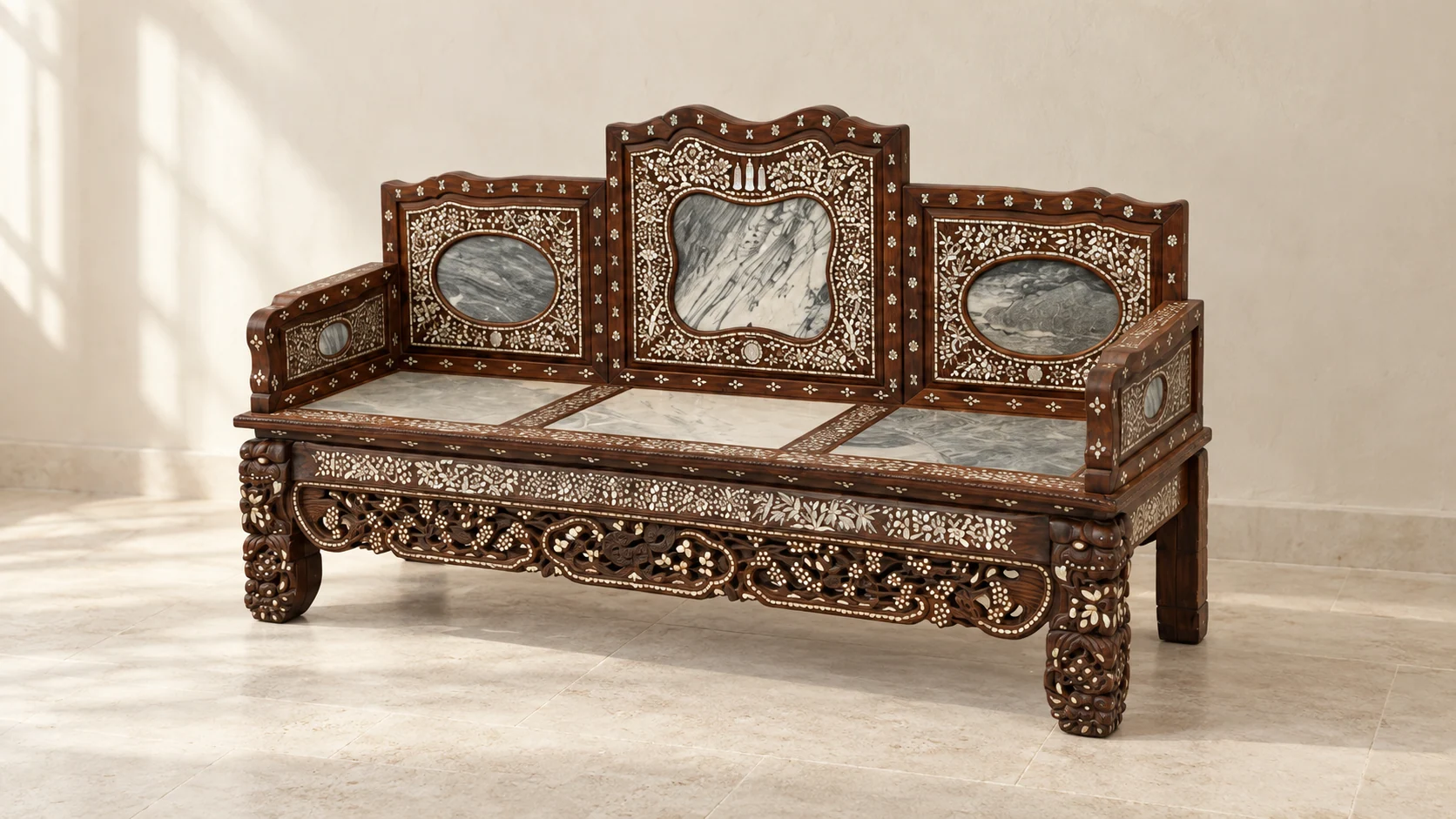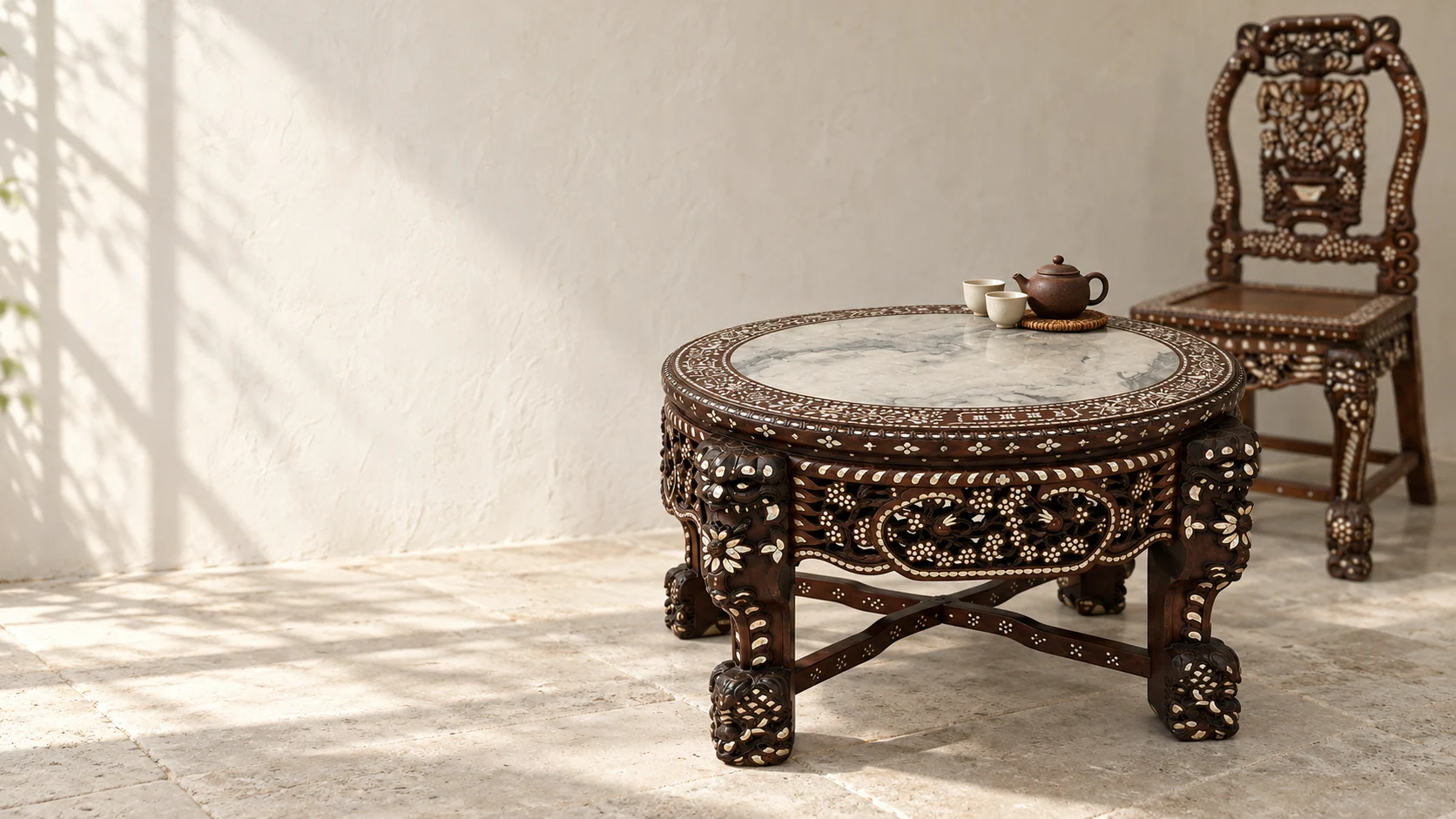
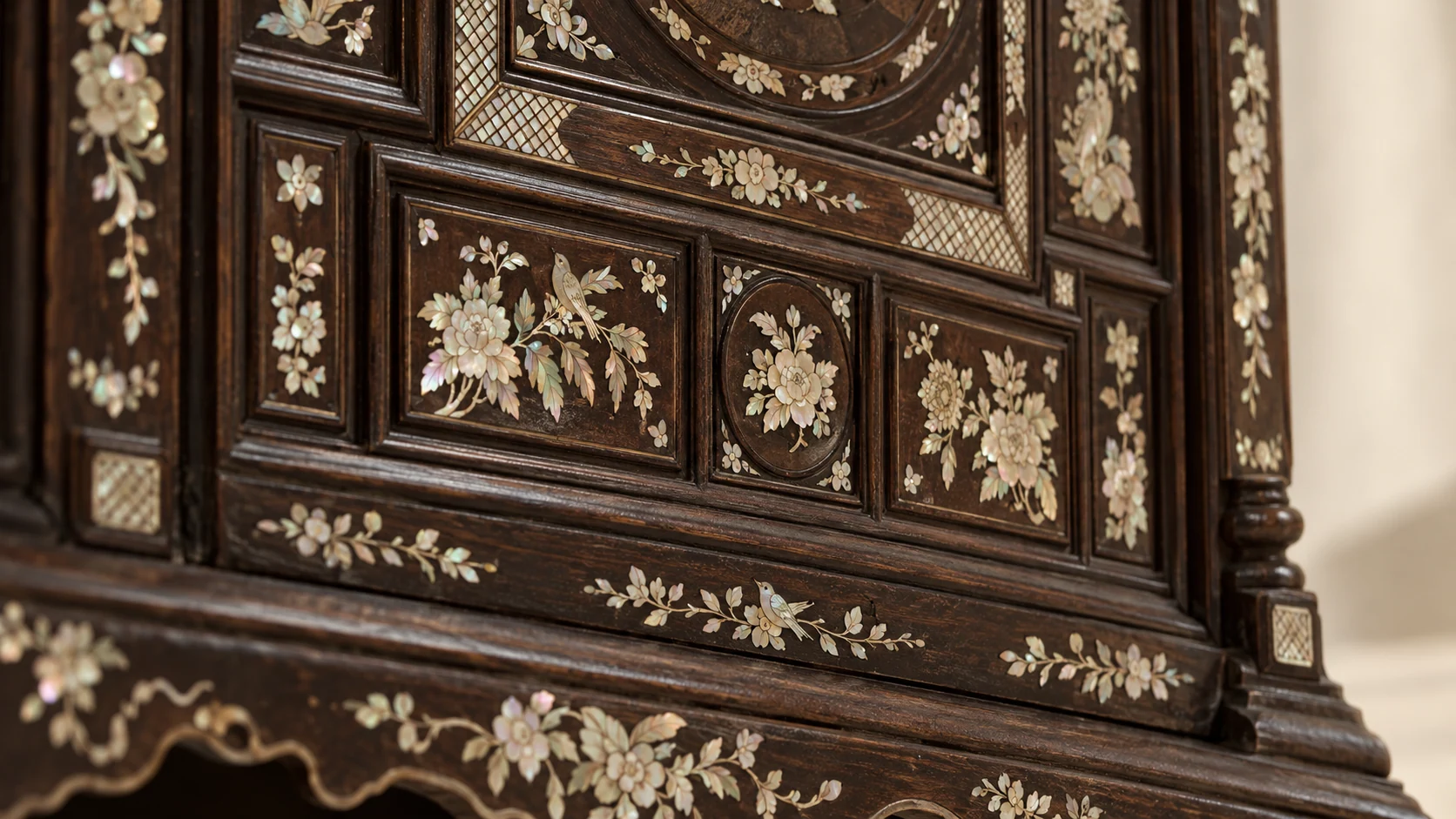
Mother-of-pearl is the shimmering lining inside certain shells. The craftsman cuts it into small pieces following a drawing, sets them into hollows carved in the wood and sands the surface flat, so the inlay sits flush, almost as if it were painted on.
Walk around the piece
Stand still and many of the pieces look plain ivory. Step to the left or right, or crouch a little, and one by one they turn pink, green or silver. Mother-of-pearl is made of many very thin layers, and the light coming back from each layer is slightly out of step with the next, which is where the colors come from.
Where the inlay sits
On a chair, inlay usually runs along the frame of the back and the arms, across the apron just under the seat and down the legs. On a table it tends to circle the rim and the apron, leaving the middle for a wooden or stone top. To judge the work, look where shell meets wood: the tighter the edges and the smoother the curves, the more care went into the piece.
The light that suits it
Low sun through a window, or a warm lamp set low beside the piece, makes inlay sparkle most. Even light across the whole room softens it, and the colors shift less. Still, don’t leave inlaid furniture in strong sun all day: the wood around the shell expands and shrinks with the heat, and over time the pieces can lift.
Keeping inlay clean
Dust in the carving and around the shell makes the whole piece look dull. Once a week, brush it gently with a soft brush, such as a makeup or paint brush, then wipe it with a dry cloth. If a piece feels raised, don’t pry at it, and don’t fix it yourself with superglue. If one falls out, keep it in a small envelope so a craftsman can set it back in its own place.
— Kho Đồ Cổ